When the heir apparent Yusuf İzzeddin Efendi passed away in 1916, Mehmed Tevfik Bey (Biren) assumed the administration of his estate as guardian. The documents, which were shaped around issues such as the distribution of income among family members, expenditures made, and the administration of the estate, reached a significant volume and eventually became an independent collection. The collection, consisting of 4,048 documents produced between 1916 and 1968, is organized in 17 folders and 1,330 files.
Yusuf İzzeddin Efendi ailesiThe Veysel Pasha Papers belong to Veysel Pasha (1866-1892) and his son Ali Rıza Pasha (1901-1923), who were among the last of the Ottoman State’s Grand Mushirs. The collection consists of correspondence regarding their administrative, military, and political activities in the regions of Manastir, Prizren, Yakova, Ipek, and Kosovo in the Balkans, as well as their personal affairs. The collection, dating from 1866 to 1923, is organized in 141 documents, one folder and 85 files.
Veysel PaşaTimur Kocaoğlu (1947-), a Turkish historian and political scientist of Uzbek origin, was the first Uzbek scholar to defend his doctoral dissertation at Colombia University. The document was sent to ISAM as a donation by Kocaoğlu along with some books from the United States of America.
The collection features items dated between 1968 and 2019 and is categorized in 11 folders and 168 files. It contains many academic studies, personal correspondence, and documents belonging to Timur Kocaoğlu. The prominent documents in the collection include: notebooks containing poems, stories, and plays written in the handwriting of Dr. Captain Şerafeddin Bey, a martyr of the War of Independence; letters written by Şerafeddin Bey to his wife Hasine Hanım, his brother, poet Ahmet Kutsi Tecer, and his father; Ottoman postcards; photocopies of correspondence between Timur Kocaoğlu’s father Osman Kocaoğlu and Kazakh political leaders Mustafa Çokay and Ahmet Zeki Velidi Togan.
The Tercüman Newspaper Archive contains manuscripts (handwritten texts) from the Ottoman period and the early years of the Republic, including literary, historical, and mystical texts and works, as well as theater works, which have been transferred to Tercüman Newspaper Publications.
Literary works, poetry books, novels, essays, memoirs; historical documents, military histories, official documents (memoranda, dispatches, foundation and expense ledgers); Sufi works and texts focusing on topics such as wahdat al-wujud, tawhid, and stages of spiritual development; and works on Ottoman and early Turkish theater form the core content of the collection.
In addition, the archive also contains notebooks containing works and correspondence written in the handwriting of well-known figures in society. One of the most prominent sections of the collection consists of personal notebooks and letters belonging to the Sabri Kalkandelen family.
Some of these handwritten notebooks have been published, some have been published but are rare copies, and some have never been published.
This fond contains documents reflecting Rıza Tevfik's world of thought, the political events of his time, intellectual movements, and his relations with his environment and the world. Covering the years 1856-1997, the collection is organized in 32 folders and 921 files. It contains 3,998 documents of 12,978 pages, including correspondence with important people and institutions in Turkey and around the world, as well as manuscripts, photographs and newspaper clippings. The fond, which sheds light on the last period of the Ottoman Empire and the early years of the Republic, is a valuable source for research on this period.
Rıza Tevfik BölükbaşıThese archival documents include expense ledgers, official correspondence, and various other documents related to the foundation established by Pertevniyal Valide Sultan and the income-generating properties (akarlar) affiliated with this foundation. Among the documents are lists of books donated by Valide Sultan, expenses related to candlesticks used in the Holy Mosque of Mecca, and information about the procurement of candles for these candlesticks. There are also ledgers showing the expenses incurred during the construction of the hospital she had built in Medina.
The archive also contains documents and correspondence related to the repairs and maintenance of various structures, as well as gifts made to state and foundation officials working under the foundation.
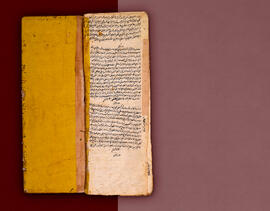
Şer'iyye Registers are the notebooks recorded in the courts of the Ottoman period. These registers, which contain the legal proceedings of the society in the center and provinces of the Ottoman Empire, are an important source for research in the social, economic, legal, demographic and architectural fields of Ottoman history. They are considered to be primary sources for understanding the functions of local administration, the structure of cities and social order. Today, these registers provide researchers with the opportunity to go deeper into Ottoman history and conduct micro-level studies.
The content of the registers includes all kinds of records related to civil law such as legal disputes, inheritances, inheritance divisions, marriage and divorce, notarial procedures (purchase-sale, lease, donation, debt exchange, loan transactions), criminal cases, municipal activities and the price regulations, documents related to the disposal, construction and repair of foundations and/or public buildings, copies of provisions and edicts from the center, and social and economic issues of the society.
The earliest examples of Shar'iyye Registers in the Ottoman Empire belong to the court of Bursa. The first examples of the registers, dated 1455, were kept regularly until the beginning of the twentieth century, even though they have been become narrower in terms of the subjects they covered due to the establishment of new courts in the second half of the nineteenth century.
The ISAM Library Archive is the most comprehensive collection of qadi registers in the world, including those of Istanbul, Anatolia, the Balkans and some cities in the Middle East. They can be searched digitally at the İSAM Library.
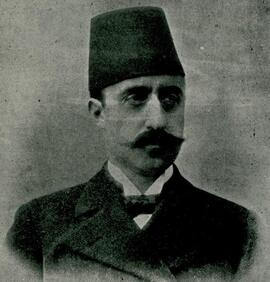
Orhan Şaik Gökyay (1902-1994) was a literary historian, language researcher, and important poet. The collection contains Gökyay’s personal documents (diplomas, identity cards, certificates of honor, and photographs), his correspondence with many individuals and institutions in Turkey and abroad, his published poems and essays about poetry, manuscript copies of all his works, various works in the fields of literature, history, and folklore, and documents related to the Turanism Trial. The collection features items dated from between 1940 and 1992 and is categorized in 106 folders and 2,069 files.
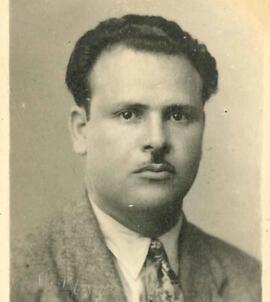
Orhan Şaik GökyayProf. Dr. Muḥammad b. Tāwīt al-Ṭanjī (1918-1974) was a Moroccan scholar of literature, fiqh, and history known for his scholarly publications. The collection includes works on history, literature, philosophy, hadith, astronomy, and many other subjects. The collection, which consists of notebooks, miscellaneous documents, and bibliographic fiches, is organized in three groups. Notebooks constitute a significant portion of the 550 documents. These notebooks, which largely contain academic notes, include bibliographical information, indexes, and various works, as well as research that al-Ṭanjī started but did not complete. The miscellaneous papers include 189 letters. The collection, which dates from 1814 to 1997, is classified in 96 folders and 768 files.
Muhammed b. Tavit et-TancîMehmed Safayhi (1890-1977) served as a sorting officer at the Süleymaniye Library Directorate between 1937 and 1970. The 216 files of this collection are categorized under seven headings: bibliographic works, index and miscellaneous works, letters, family, professional documents, miscellaneous, poetry, prayers, and notes. The notebooks, which are available in full text, contain bibliographic information on hundreds of works. The alphabetically successive notebooks were prepared by Mehmed Safayhi during his tenure as a sorting officer at the Süleymaniye Library and can be used as a guide for cataloging manuscripts.
Untitled